Thursday, March 12, 2015

Field Trip to Birmingham!!!!

The US History and APUSH classes went on a field trip to Birmingham. We went to the 16th Street Baptist Church and the Civil Rights Institute Museum. At the 16th Street Baptist Church, the volunteer speaker told us about the time during the Civil Rights Movement. One thing I learned from this man is that Robert Chambliss was the man who put the bomb at the church. I also learned that it took 14 years after the bombing to call him as a suspect. The bombing took 4 innocent young girls lives. They were in the same room and when the fire department found the girls, their tiny bodies were stacked on top of each other. On the documentary film, that we watched before we went to Birmingham, they talked about the bombing, but learning about it from someone who was alive during the Civil Rights movement changed my perspective. 

Going to the Civil Rights Institute also changed my perspective of the Civil Rights Movement. My favorite artifact in the whole museum was the music jukebox that was in the beginning of the self guided tour. I spent the most time in the music area because I did not know that music was a big part during this time. In the documentary, the video would show people singing while they were protesting and even singing in a jail cell. The music was all jazzy and and all of the African Americans seemed to be happy while they were singing. They were proud of their musical talents. Another part of the museum that I enjoyed was the big poster of the American flag with faces in between the flag behind it. My first impression of this artifact was that African Americans were not a part of the American society and the people who are behind the flag are trying to be a part of the society, like how they were trying to gain freedom during the movement. I also enjoyed looking at the KKK outfit that they wore. Emory and I were like "This is not a cute outfit to wear, why would they wear that?'

The Civil Rights Field Trip was definitely a good trip to have. It changed my perspective on how the Civil Rights Movement actually was. Looking at all the artifacts made it seem very realistic and showed how African Americans really did fight for freedom and equality. This trip was a different experience for the 11th graders. Staying in school learning about the civil rights movement is very boring. History is history, but actually learning about it at the place where it began made it seem more important. 


Wednesday, February 25, 2015

Questions about World War I

1. When did World War I begin, and Why? (What was the immediate cause?) Between what two groups of allies was it fought? Give the name and member countries for each of the opposing sides.
       World War I began on July 28, 1914. The immediate cause of the war was the assassination of Franz Fernindad, the archduke of Austria-Hungary. The war was fought between two group of allies. The Allies included Britain, France, Russia, Italy, and United States. The Central Powers included Germany, Austria-Hungary, Ottoman Empire, Bulgaria.  

2. When and why did the United States enter the war
        The United States entered the war on April 6, 1917. They entered the war when Wilson requested a declaration of war to the Congress because Germany violated its pledge to suspend unrestricted submarine warfare in the North Atlantic and Mediterranean.

3. When and why did World War I come to an end
         World War I had come to an end when Germany abdicated on November 11, 1918. The war ended because Germany was not strong enough to fight ever since the United States decided to join. 

4. What were the terms of the major agreement ending the war? Why did the United States not ratify this treaty, even though President Wilson had played such a major role in negotiating it?
          All of the nations had agreed to stop fighting while the terms of peace were negotiated. The United States did not ratify this treaty because they did not want to be involved with the League of Nations, which would lead the U.S. to overseas problems and possibly overseas wars. 

5. Come up with a question of your own. What would you like to know? What do the facts about World War I make you wonder?
         Was world war I avoidable? How many people died during the war? How were people in Europe affected during the war? 


Tuesday, February 24, 2015

Women Suffrage Movement

             The Woman Suffrage Movement started from woman’s ongoing struggle for Equality throughout the nineteenth and twentieth century. Women were denied equality almost completely. They had little say in politics, education, work, and in their homes, and therefore they began a strong movement that would continue to present day in order to gain equality. The movement’s main goal was to attempt in gaining equal rights, particularly the right to vote. Eventually the movement led up to the ratification of the Nineteenth Amendment of the United States Constitution.
            
     In the nineteenth century, women were excluded from most emerging professions.There were only a few women who were actually doctors, lawyers, engineers, or even managers of companies. Most of the women during this time period were educated, as well as, black women. Black Women who were educated took teaching jobs. Even if these women are educated, most people, men and women, believe that women are not suited for the “public world.” During this time period, many technological innovations made housework less onerous and because of this, women were looking for activities outside of housework. This is what made women realize that they did not have the same rights as men.

                The Women Suffrage Campaign started in 1848 at Seneca Falls Convention at Seneca Falls, New York. Suffrage supporter’s main goal was to obtain the right to vote for females and to try to educate the public about the importance of voting rights. The Convention was organized by females who stepped up to take this important role. They were Jane Hunt, Mary Ann McClintock, Lucretia Mott, Elizabeth Cady Stanton, and Martha Wright. They were all motivated by the fact that they had too little intellectual activities. Their goal at the convention was to gather social, economic, and intellectual ideas and then brainstorm possible solutions to the problems. During this convention, there were struggles that they had faced. This was from differences in leadership roles, various strategies and solutions, and shifting political environments. As time went one, membership increased from 13,000 in 1893 to millions of people by 1910. At the end of this convention, Elizabeth Cady Stanton and Susan B. Anthony, a key figure in the movement, organized the National Women Suffrage Association. Another organization, The National Woman’s Party, was under the control of Alice Paul. This organization also was made to fight for women’s rights. This organization is different from NWSA because it was more militant. This means that they undertook radical actions.
This picture shows two women holding a sign that says "Votes For Women." These women look like they are part of a women suffrage organization. This is because they are dressed in "rich" clothes.
                Under the leadership of Anthony, Stanton, and Paul, suffragists undertook radical actions. Politicians were unwilling to listen to their views and their beliefs. Because of this, the woman suffrage movement became a mass movement because they believed that they needed to be heard. Suffragists targeted the Congress and took part in actions that rebelled against the government. During the presidential election, Anthony was thrown in jail for illegal voting when she cast a ballot for Ulysses S. Grant. Suffragists were willing to break the law to raise awareness. They used tactics, parades, silent vigils, and even hunger strikes. This caused them to get their attention on media and granted them the attention on media.

                  Cartooning and social media were a big part for the women suffrage movement. Before this time, cartooning was considered to be masculine, but was an entry to cartooning for women. Cartoons were illustrated as both negative and positive. They portrayed females in two different positive views. Women were advertised as weak, victimized, and suffering from oppression, and therefore in need to vote in order to get the protection she needs. Another positive way was that they were shown as morally superior and as someone who would sweep corruption out of the government and therefore deserved the right to vote in order to protect the country. The visual imagery had a major impact across the country and reached out to larger audiences and in fact changed some views about woman suffrage. Anti-Suffragists also created propaganda and created negative stereotypes. Their goal was to take an idea, object, or person and then create it to impose a single form in which denies the variations of woman suffrage. This was a challenge for suffragists because the stereotypes and illustrations that the anti-suffragists created compelled viewers, which sent opposing messages.

            The Women Suffrage Movement was the largest single reform movement in American history for the fight for women suffrage. Suffrage advocates believed that they had “natural rights” like men do and that they deserve the same rights as men. Along with the people fighting or women rights, there was also an anti-suffragist movement. The Anti-Suffragists were mostly dominated by men but there was support from women too. Most women who supported the anti-suffragists were usually middle-class, conservative, and Protestant. They believed that women suffrage was against the laws of nature for to women to seek rights and believed that it would go against God’s will. They wanted women to feel proud that they were bound to the affairs of home and family. They praised women for their mental and emotional different to man, inferior to the public, but superior at home. The Anti-Suffragist’s views were spread through media. In July of 1908, The New York State Association Opposed to Woman Suffrage published their first issue “The Anti Suffragist.” This newspaper’s goal was to present arguments against woman’s suffrage and to show the views of woman who opposed woman suffrage. Even after the nineteenth amendment had been passed in 1920, another news article, Woman Patriot, continued to publish articles opposing the work of feminists and liberal woman groups.
  
This is a picture of an organization that is opposed to women suffrage. Most of the people who were part of this organization were men. There were some women that took part in these organizations.

              Closer to the ratification of the nineteenth amendment, states had been voting to grant women the right to vote. In 1910, Washington had become the first state in fourteen years to extend suffrage to women. California and four other states had also allowed women to vote. The states on the west side of the country were the first to allow women to vote. This is because there was an absence of large Catholic communities in the west, but in the east, woman suffrage was a cultural issue. In 1913, Illinois has become the first state of the east to embrace suffrage. By 1919, thirty-nine states had granted women the right to vote. And finally in 1920, women around the country had the right to vote. The nineteenth amendment was a crucial step in the process by which the nation extended political rights. When women gained the right to vote, voter participation of men and women started to decline nationally.
This picture shows the success for women's rights after the election. The countries that have granted suffrage are in white. 
            In conclusion, The Nineteenth Amendment allowed women to begin participating in the public sphere of the United States, but this participation would not have occurred if it were not for the Women’s Movement of the nineteenth and twentieth centuries. Both the National Women Suffrage Association and the National Woman’s Party granted voting rights for women. 

This picture shows an organization that supports women suffrage. On this sign, there is an advertisement directed to the men who don't support women suffrage. The organization is supported mostly by women. 
This picture shows women in a parade advertising that "President Wilson supports Women Suffrage" President Wilson was one of the few men that supported women rights. Many men opposed to women suffrage.

ANNOTATED BIBLIOGRAPHY:

Sheppard, Alice. Cartooning for Suffrage. Albuquerque: University of New Mexico Press, 1994. 
      I used this website to learn more about the cartooning that took place during Women Suffrage. In this website they talk about cartoons that were drawn in both the American suffrage movement as well as the British suffrage movement. For this research project, I only read the information that was relevant to the American suffrage movement. This website was useful because it gave me a good understanding of why these cartoons were drawn. This website also included cartoons that were drawn during the movement. 

Mintz S, McNeil S. Overview of the Progressive Era. Digital History, 2013. 
      This was the first website that I used to start my research. This website was useful for me because it allowed me to get an overview of what the progressive era was like and what the women suffrage movement was. This website helped me find ways of expanding my research. There is not a lot of information about women's suffrage or about the progressive era but it gave me a start to what I need to focus on in my research.

Teaching With Documents: Woman Suffrage and the 19th Amendment. The U.S. National Archives and Records Administration
      This website included many primary sources. This website is from the U.S. National Archives which is a government website. The url includes ".gov" so this also indicates that it is a government website. This website does not have an author but I believe that this is a credible source because it includes many documents like Susan B. Antony's Petition to Congress that has pictures of her actual petition. The petition itself was very hard to read, but there was a paragraph explaining what Anthony was petitioning about. I used 4 primary documents from the women suffrage movement for my research.

DuBois, Ellen. Reconstruction and the Battle for Woman Suffrage. New York: The Gilder Lehrman Institute of American History, 2009. 
      This website allowed me to get an understanding of how Women Suffrage started. This article by DuBois, talks about the anti suffragists and the people for woman suffrage. This website helps with the history part of research and the background of how women got voting rights. I believe that this is a credible source because the author is a professor at the University Of California in Los Angeles. The website that this information comes from is also from an institute in New York that has a large collection of American historical documents from 1760-1876. 

Causes: The Woman Suffrage Movement. Washington D.C: National Women's History Museum, 2007. 
       This website helped me with my research by helping me understand the causes of the women suffrage movement. This website does not have a lot of information about the movement after how it started but it is a helpful website. This website does not have an author but I believe it is a credible source because this article is from the National Women's History Museum in D.C. This website also includes pictures that have helped me see what the suffrage movement was and to see the "leaders" of the movement in pictures with captions explaining what they were doing. 

The Women's Rights Movements, 1848-1920. Washington D.C.: History, Art, and Archives United States House of Representatives. 
       This website was the best website that I used for my research because it really gave a deeper meaning of the women suffrage movement instead of just listing facts about the movement. This website gives information about how it started and about the challenges from the movement. This website does not have an author but I believe it is a credible source because it is a government website from the United States House of Representatives. I also believe that this is a credible source because at the end of the article there were citations from other sources that the government had used. Most of the websites that I used for this research project did not have citations like this website.

Hawkes, Sarah. The Battle For Freedom: American Suffragists and the Nineteenth Amendment. US History Scene, 2012.
        This website was one of the most useful websites for my research. This is because it includes the history of how the women suffrage movement started and where it first took place. The author tells us about the first advocates of the movement. I believe that this website is credible because I believe that the history that the author rights about is true. This website only lists facts about the movement. This website will be useful for the first part of my essay because it has given me enough information to write about how it started and the introduction to the movement.

Brinkley, Alan. American History: A Survey, 12th edition. McGraw Hill/ McGraw Hill Higher Education, 2007.
         This book had a lot of information on the women suffrage movement. The women suffrage movement was one of the largest sections in the chapter. The book includes a wide range of information about the movement. It included how it started and the famous leaders that led the movement. I believe this is a credible source because it is a history textbook and I don't think any of the information that is provided is false. This book helped me with my research because I could research some of the names mentioned in text and then searched for them in other sources.


Monday, January 26, 2015

How To Analyze a Political Cartoon

How do you view a political cartoon?1. Why did they draw the cartoon
2. What message does it send to the cartoon viewers
3. Is it offensive to someone or something
4. What stands out from the cartoon
5. Is there something odd looking in the cartoon
I would observe the techniques that the cartoonists use for their political cartoon. Some of these techniques include symbolism, exaggeration, irony, or analogy. After looking at the political cartoon I would read the caption or any words that appear on the cartoon. After doing that I will question myself " What is this cartoon about" I would also see it in the view of the cartoonist.
This political cartoon is a representation of the Spanish American War. This cartoon shows a cuban mother crying over her son. This shows how deadly the Spanish American War was. The caption "The Cuban Mother" shows how young men like the one pictured above are killed during this war. This political cartoon gives a negative message because it shows how the negative sides of this war while Cuba is trying to fight for independence. 
This political cartoon shows how the Americans are helping the Philippines in the war. They show Uncle Sam as a big "giant" and the Filipino as a small person who is begging for help. The caption " It Makes A Difference" gives a message that helping people like the Americans did will make a difference. This political cartoon gives a positive message about the Americans because it shows how they care about other countries and are willing to help.
This political cartoon is from the Philippine conflict. This cartoon shows a nice polished shoe stepping over the Philippine land. The shiny shoe represents wealth and that the Americans are invading the land. The little man is trying to use a stick to push away the big show. This shows that the Philippines have no power over the Americans. This gives a negative response because it shows that the Americans are invading the Filipinos and their land. 


Friday, November 21, 2014

Thinking About Success

1. Hardwork
2. Skill
3. Luck
4. Opportunity

Hardwork is number 1 on the list because without hardwork you cannot get anywhere in life. Without hardwork, skill, and luck there is no opportunity because you need the 3 factors to get to opportunity. For example, after the hardwork in school, you get the opportunity to get accepted into a good college. Luck is a tiny factor in hardwork. Some people are lucky, but some people are not, and you can never predict whether or not you get luck. Skill is number 2 because after the hardwork you achieve the skills. Skill doesn't come until you do hardwork. For example, if you are working on a math problem you must work hard until you understand the concept or skill. After hardwork, you can use those skills for other math concepts. Without hardwork, there is no oppurtunity.

Steve Jobs before 
Steve Jobs After His Hardwork


Wednesday, November 19, 2014

Fashion Retailing

          I read about how fashion retailers have abandoned the traditional retail models. Instead H&M, Zara, and Uniqlo have come up with their own models. Looking at the Zara and H&M website made me want to buy all of their clothing. The designs are very different from what we see in America. The companies try to attract people, like me, with their unique style to buy their clothing. The articles talk about how they have expanded over the past two decades. These stores/companies have a constant supply of new types of clothing. The companies also take a risk because they do not know if the clothing that they have made is going to be "the new style." Most retail stores are always thinking ahead. They are always thinking about creating new innovative products at least 6-9 months in advance.

Questions:
What do stores do with the clothing if it isn't not selling well?

Tuesday, November 18, 2014

Chapter 18 Test Letter

Dear Olga,
       I have finally arrived in America! It is winter now in New York City and it is very cold. There is a lot of snow. On the way here I got sick a couple of times but I am better now. Tell mama and Anja I say hello. I miss you all very much.
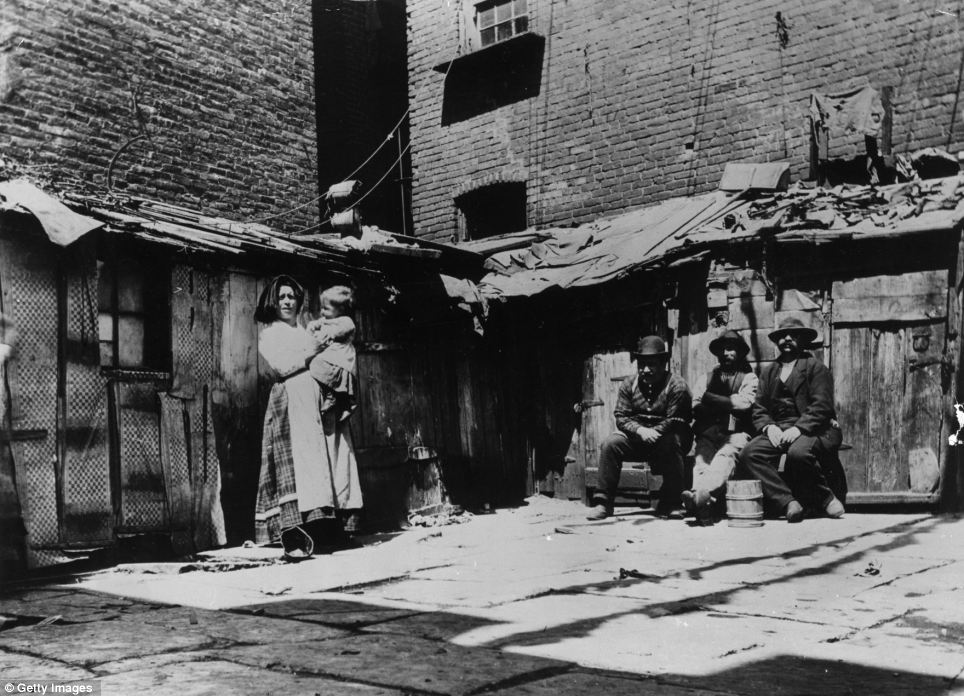
       It has been a couple of days since I have arrived in the city and I am now starting to find a job. There are many factory jobs so hopefully I will be able to work in a factory and make some money. Right now, I am living in a tenement with another family. They said I could stay with them until I make some money on my own. The area that I am living in has a lot of Germans. It is good to have people who understand where I come from. There are many Americans who are not welcoming and are very rude.

     If I get a job I am going to have to change the way I am. Even though I am in America, I hope I can hold onto my religious beliefs. People are very hostile when it comes to religion here. I must try to become American-like and try to fit in. There are many stores here with new types of clothes and you would really enjoy that. The education system is very good here and hopefully when you are 18 you can come and get a job and make a lot of money. Overall, my experience here is nice and I hope one day you all can come and we can start a life here. Here is a picture of the family I am currently living with in New York City. 

Love you, 
Papa